

Little Bustard (Tetrax tetrax)
Conservation status:
Vulnerable (Europe)
Near Threatened (world)
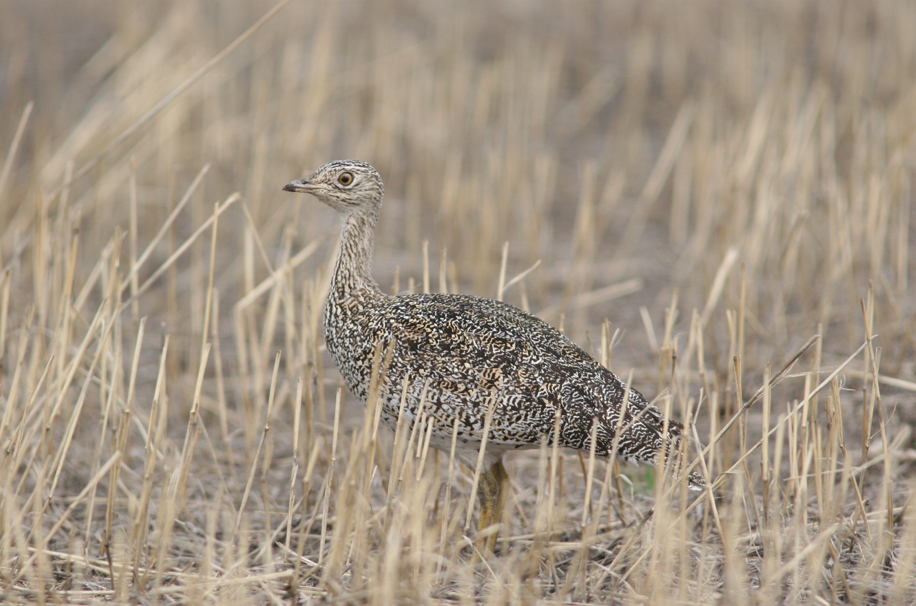
The Little Bustard (Tetrax tetrax) is one of the smallest members of the bustard family (26 species), measuring around 40–45 cm with a wingspan of about 110 cm. Like all bustards, it is a ground-dwelling bird that does not perch in trees. Despite spending most of their time on the ground, Little Bustards are strong and agile fliers, capable of covering long distances without stopping. During spring and summer, individuals of both sexes are mostly solitary, while in winter they gather into flocks.

Habitat
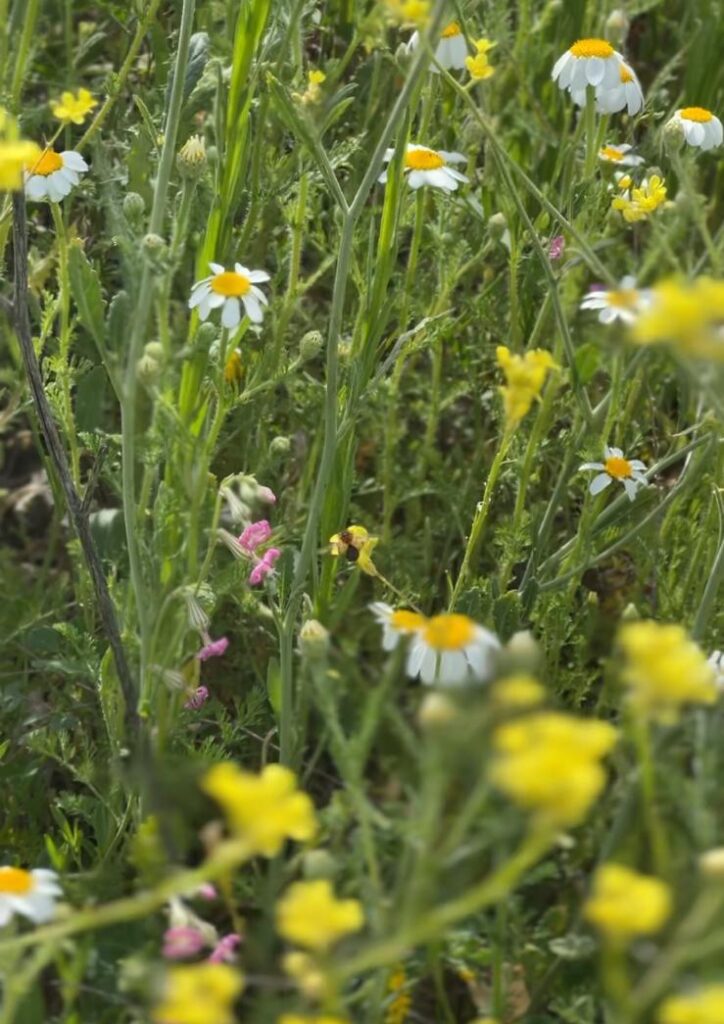
Little Bustards primarily inhabit open farmland, such as extensively managed dry cereal fields and pastures. They prefer landscapes with a mix of habitats, including pastures, long-term fallows, and legume crops, which provide diverse ground cover. Current agricultural trends—such as the shift toward monocultures, larger consolidated farms, irrigation, and the expansion of tree crops—are causing rapid loss and fragmentation of these suitable habitats.
Diet
Little Bustards are omnivorous, but their diet changes with age and season. Adult birds feed mainly on plants, particularly legumes and grasses, supplemented by other herbaceous species. Chicks and fledglings rely almost entirely on insects during the first two to three weeks, feeding on beetles, grasshoppers, ants, and other small invertebrates. As the season progresses, grasshoppers become increasingly important for the growing chicks.
Display
Little Bustards use a lekking system, where males gather on display grounds to attract females.
Breeding and chick rearing
The breeding season for Little Bustards lasts from February to June. Nests are simple scrapes in short, dense grass and contain 2–6 eggs. Incubation lasts about 20–22 days, and chicks fledge after 25–30 days. Females are solely responsible for incubating the eggs and raising the chicks, forming strong family bonds that last around 55–65 days. While females generally stop directly feeding their chicks after the first week, they guide them to suitable insects and teach them to forage independently.
Species Under Pressure
Both the Great Bustard and the Little Bustard face growing threats across Europe. Discover the factors putting these iconic grassland birds at risk.