Cross-border Protection of the Great Bustard in Austria
Project duration:
August 2005 - July 2010
Project budget:
5,840,760 €
Coordinating beneficiary:
Österreichische Gesellschaft Großtrappenschutz
Photo: Opening event of the visitortower and information board in 2010
LIFE
LIFE Nature is a programme of the EU, which supports nature protection projects in Natura 2000 areas. Natura 2000 is a network for the in-situ management and conservation of Europe’s most remarkable fauna, flora and habitats.
Concept and Objectives
Collisions with overhead power lines were for many years the main cause of mortality for adult and immature Great Bustards in Austria. The LIFE project aimed to reduce this threat and continue Austria’s extensive habitat management, with the overarching goal of increasing both the national and the cross-border West Pannonian population. The project also sought to highlight the value of the cultural landscape and the importance of integrated Natura 2000 conservation.
Implemented measures
Powerline mitigation
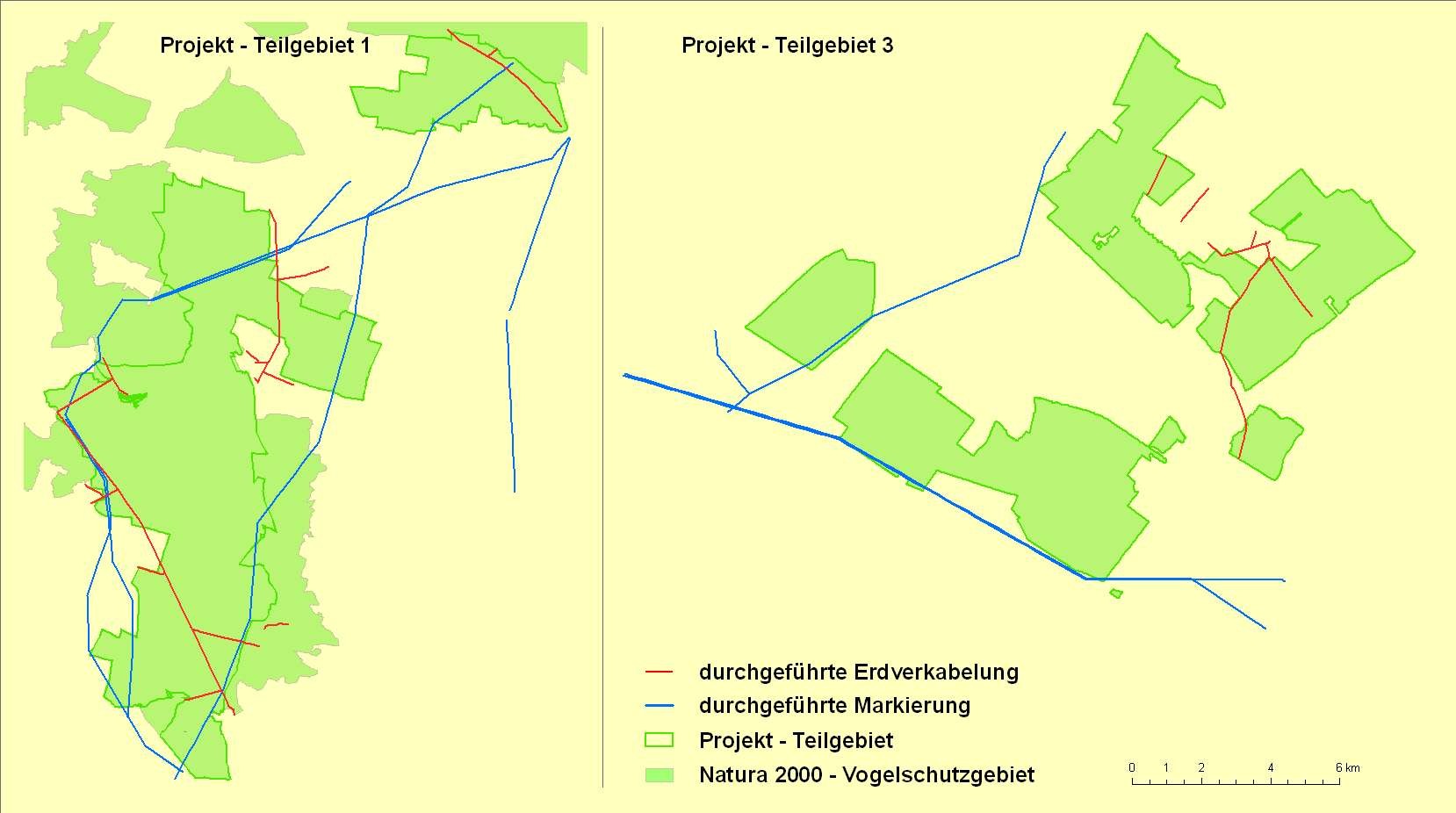
Underground cabling 47.4 km of medium-voltage powerlines were placed underground (10% more than planned) in the project areas Westliches Weinviertel (33.2 km) and Parndorfer Platte – Heideboden (14.2 km), creating large power-line-free areas for bustards.
Marking of high-voltage powerlines 153 km of high-voltage lines (110–380 kV) were marked with bird warning devices (22% above target) across all project areas, including 80 km in Westliches Weinviertel.
Habitat management
extensive habitat management (maintaining suitable habitat and food availability)
collaboration with 550 farmers and over 100 hunters
Cross border cooperation
Because bustards regularly cross national borders, Austria cooperated closely with Hungary, Slovakia, and the Czech Republic to ensure coordinated protection of the West Pannonian population.
Photo: Underground cabling and powerline marking within the project subareas
Population impact
Due to underground cabling, line marking, and broad conservation efforts, the Austrian Great Bustard population increased from 140–165 birds in 2005 to 244–274 in 2010, contributing to the positive trend in the entire West Pannonian population.