

Great Bustard (Otis tarda)
Conservation status
Europe: Least Concern (LC), Population trend: Decreasing
Global: Endangered (EN), Population trend: Decreasing
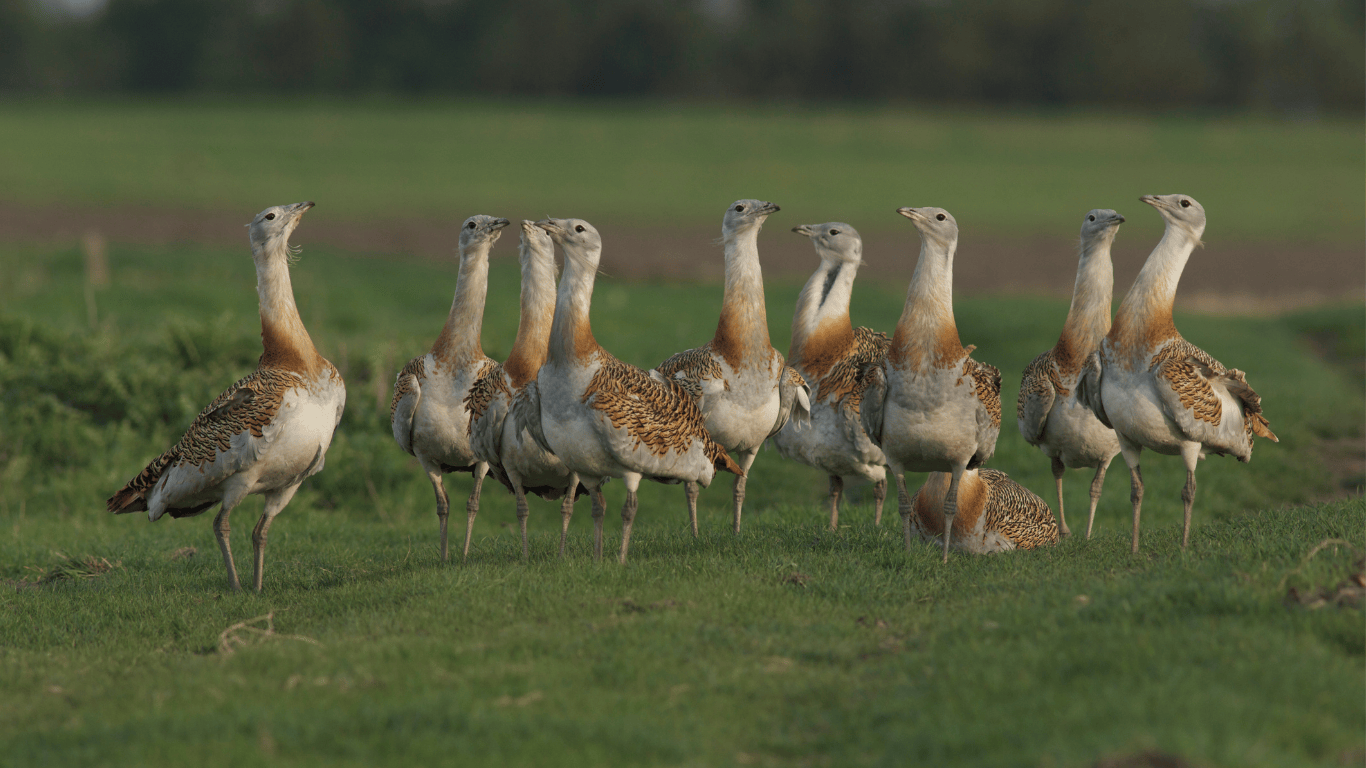
The Great Bustard is one of the heaviest birds in the world that is able to fly, with males weighing between 8 and 16 kg. They are powerful and tireless fliers and despite their impressive weight they can take to the air from the spot with vigorous wing beats.
Even though they like to roam around on foot in open, unfragmented areas, they fly for several kilometres between sites in their home ranges almost daily. They are excellent fliers and can cover distances of more than 200 km per day. Since Great Bustards frequently fly and since their manoeuvrability is limited by their great weight and large wingspan, collisions with power lines occur where there are numerous overhead powerlines inside bustard ranges, in surrounding areas, or on flight paths between different ranges.
Population trend
(in the last 10 years):
The Great Bustard is one of the heaviest birds in the world that is able to fly, with males weighing between 8 and 16 kg. They are powerful and tireless fliers and despite their impressive weight they can take to the air from the spot with vigorous wing beats.
The Great Bustard is one of the heaviest birds in the world that is able to fly, with males weighing between 8 and 16 kg. They are powerful and tireless fliers and despite their impressive weight they can take to the air from the spot with vigorous wing beats.
Even though they like to roam around on foot in open, unfragmented areas, they fly for several kilometres between sites in their home ranges almost daily. They are excellent fliers and can cover distances of more than 200 km per day. Since Great Bustards frequently fly and since their manoeuvrability is limited by their great weight and large wingspan, collisions with power lines occur where there are numerous overhead powerlines inside bustard ranges, in surrounding areas, or on flight paths between different ranges.
Population trend (in the last 10 years):
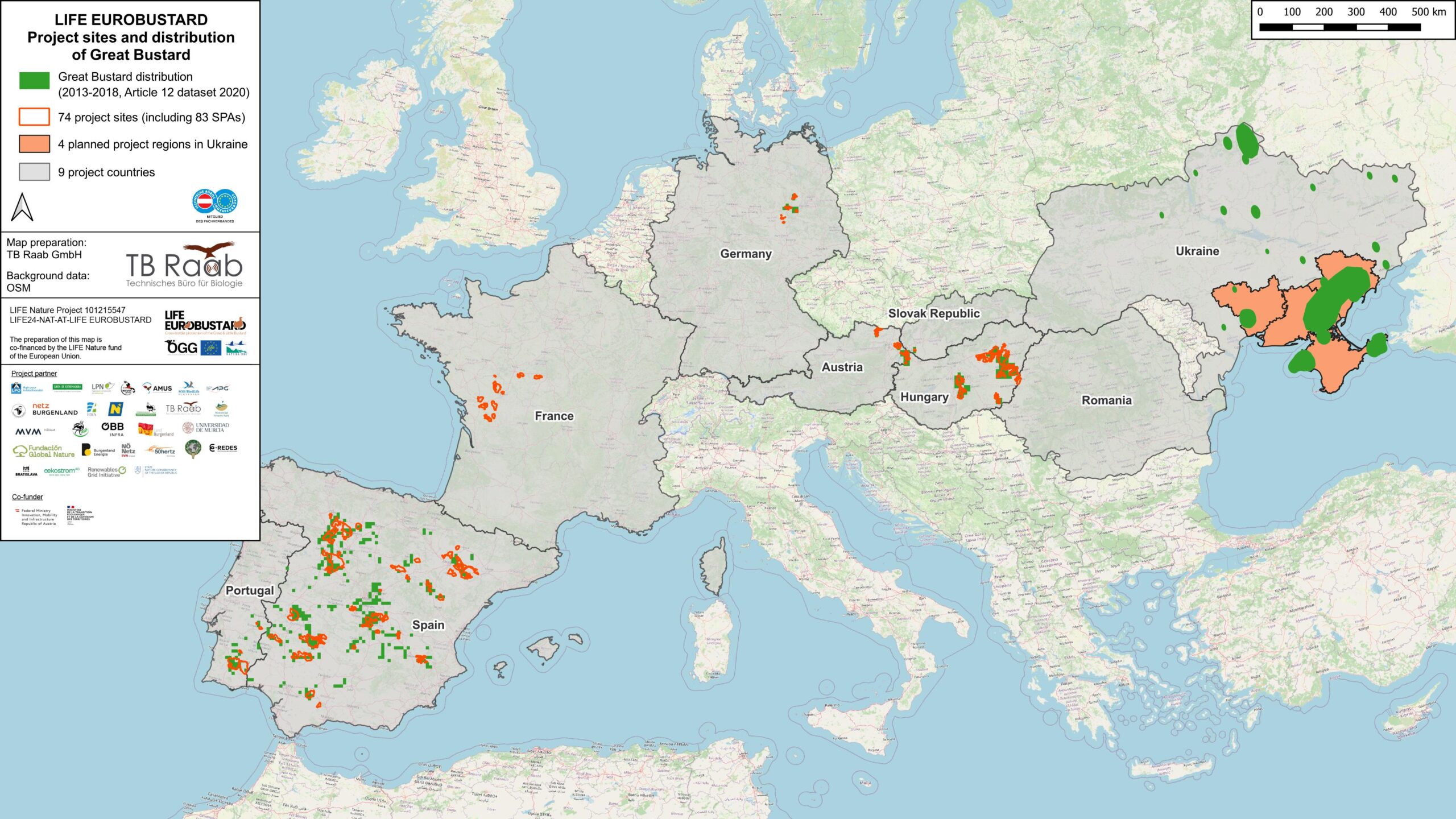
The Great Bustard world population currently decreased at an annual rate of 3.23% and nowadays holds 34% less individuals (31.000-36.000) than 16 years ago.
Around three quarters of the world population live on the Iberian Peninsula. There is a remarkable population decline of 50% in Portugal and 28% in Spain which indicates a loss of more than 8,000 individuals in Spain itself.
The Central European population is the only bustard population in the whole world that shows a population increase in the last 20 years, because of successfully implemented LIFE projects in the respective areas (2.723 Individuals in 2024).
Europe: rapidly decreasing especially in the last 5 years .
Germany: increase for some years and slight decrease in 2024 (2017: 221 individuals; 2022: 315 individuals, 2024: 303 individuals).
West-Pannonia (Austria, Hungary, Slovakia): 2017:463 individuals; 2022: 634 individuals; 2024: 681Individuals.
East-Pannonia (Hungary, Romania, Serbia): slightly increasing in the recent years (2017:1067 individuals; 2022: 1459 individuals; 1.739 Individuals).
Spain: rapidly decreasing especially in the last 5 years; according to the national censuses in Spain, Great Bustard has a negative trend of 60% (period 2014-2023). 2019: 22.000-24.000 individuals.
Portugal: rapidly decreasing especially in the last 5 years (2021: 931 individuals).
Ukraine: 2015: 225-300 individuals.
Habitat
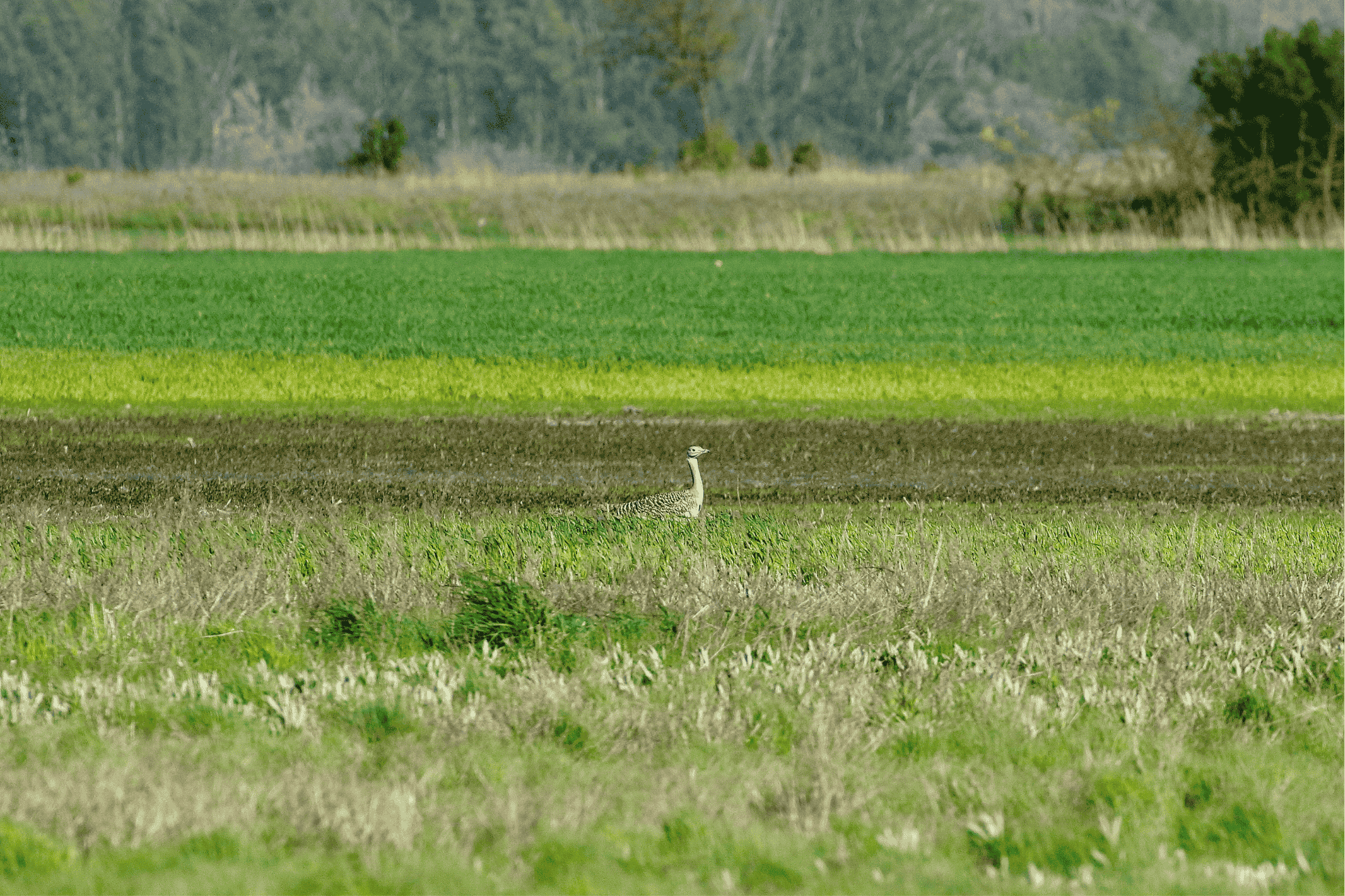
The optimal habitat of the Great Bustard is a wide, open, and undisturbed farmland with extensive cultivation and little fragmentation. Originally a steppe bird, the Great Bustard became a common breeding species in Europe’s agricultural landscapes after medieval forest clearings, when traditional, low-intensity farming systems prevailed until the mid-19th century.
With the increasing intensification of agriculture since the 19th century, many of these habitats have been destroyed. Today, Great Bustards find suitable conditions only in protected areas with large fallows, extensively managed cereal fields, and specially adapted management measures.
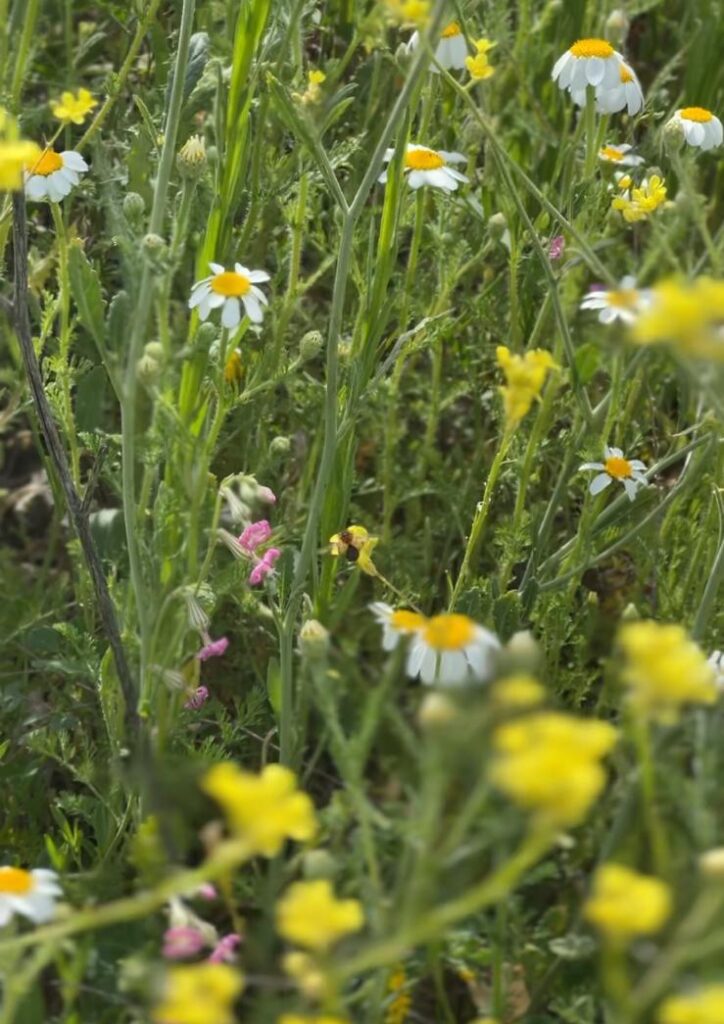
Undisturbed fallow areas with a structurally diverse ground vegetation and a rich invertebrate fauna provide ideal conditions for nesting and raising chicks. To preserve this habitat, protected areas maintain extensively farmed fields that offer the Great Bustard both food and safe breeding sites. Such measures are essential to ensure the survival of this globally threatened species.
Diet
Adult Great Bustards primarily feed on herbaceous plants, while chicks rely on the availability of insects during their first weeks as a high-energy food source
Display
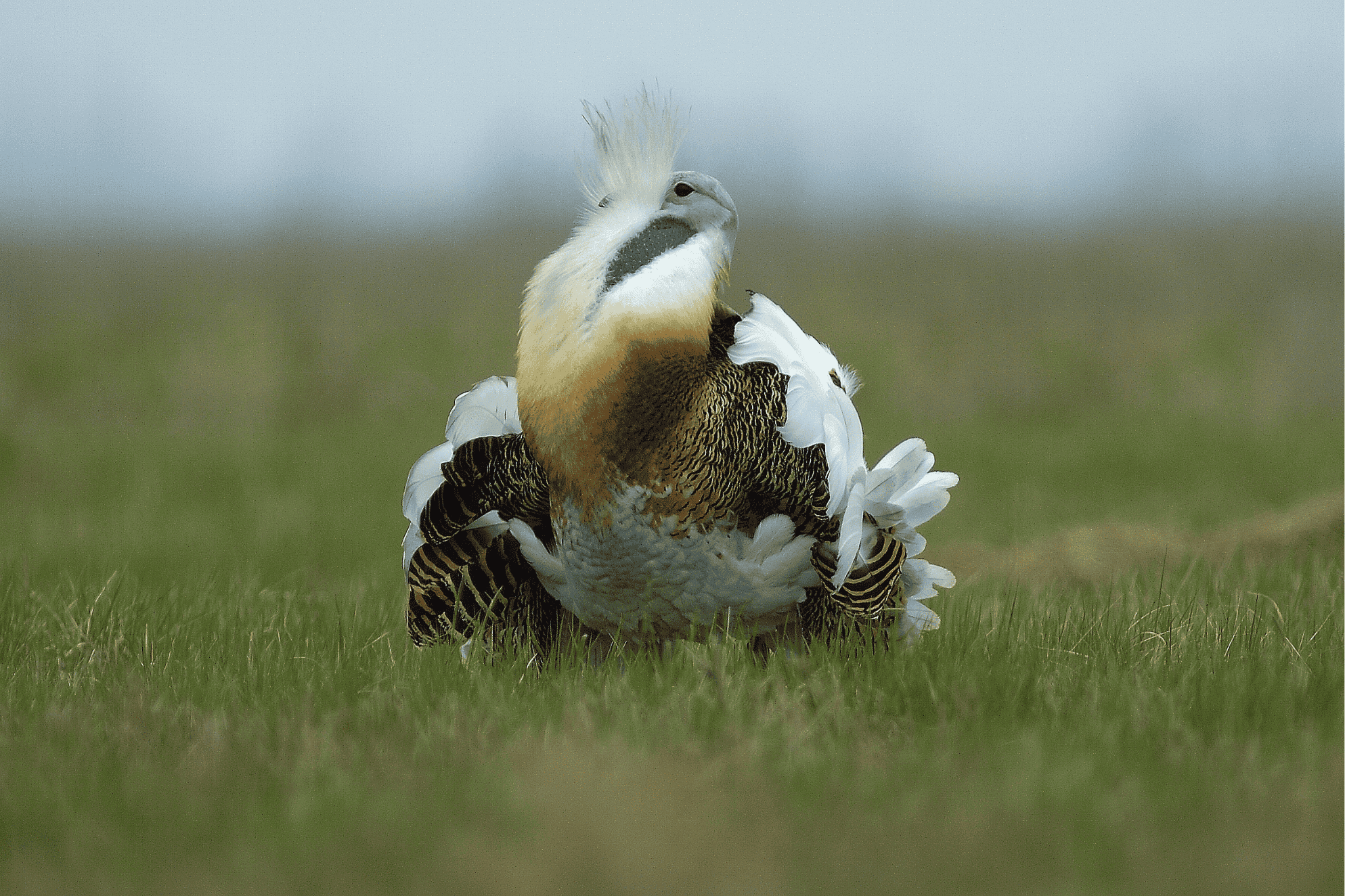
Great Bustard display grounds are usually large, open, and undisturbed areas with low vegetation. From early March to the end of June, they experience the most active phase of their annual cycle: males perform elaborate display rituals to attract females, while both sexes move intensively between display, breeding, and wintering areas. These traditional sites are used by the birds over many years, allowing for targeted and long-term management and protection.
Breeding and chick rearing
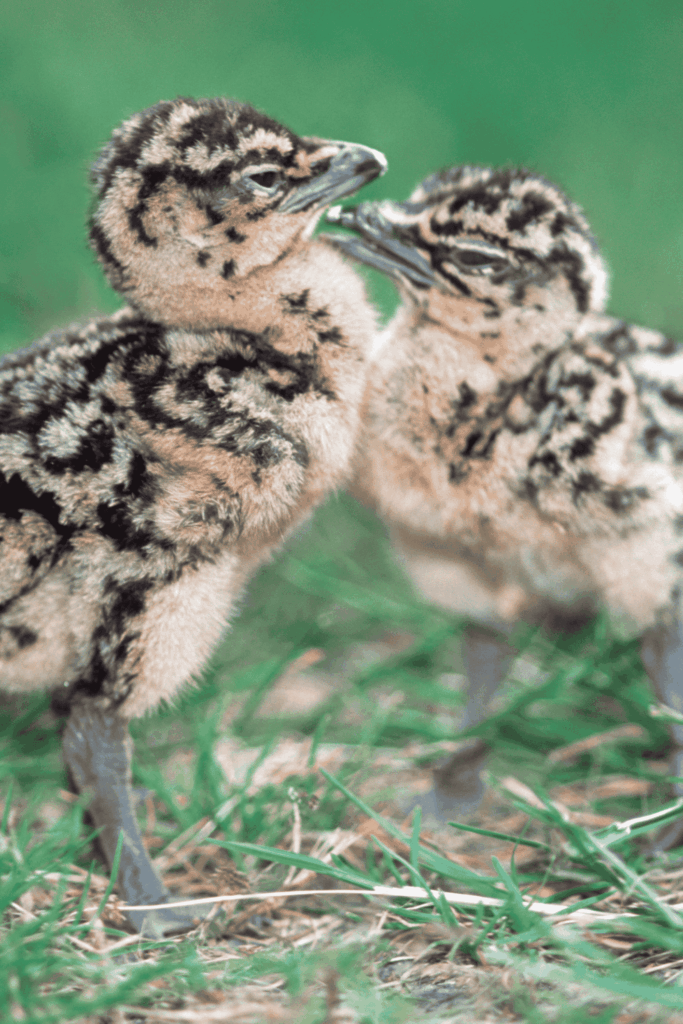
The incubation period lasts about 28 days. Newly hatched chicks are completely flightless and can move only very limited distances in the first weeks. Even at 6–8 weeks of age, they can manage only short flights and still prefer to walk. This means that a female and her chicks spend approximately 2.5–3 months “flightless” in their agricultural environment.
Species Under Pressure
Both the Great Bustard and the Little Bustard face growing threats across Europe. Discover the factors putting these iconic grassland birds at risk.