LIFE+ Project “Cross-border Protection of the Great Bustard in Austria – continuation”
Project duration:
October 2010 - December 2015
Project budget:
4.508.481 €
Coordinating beneficiary:
Österreichische Gesellschaft Großtrappenschutz
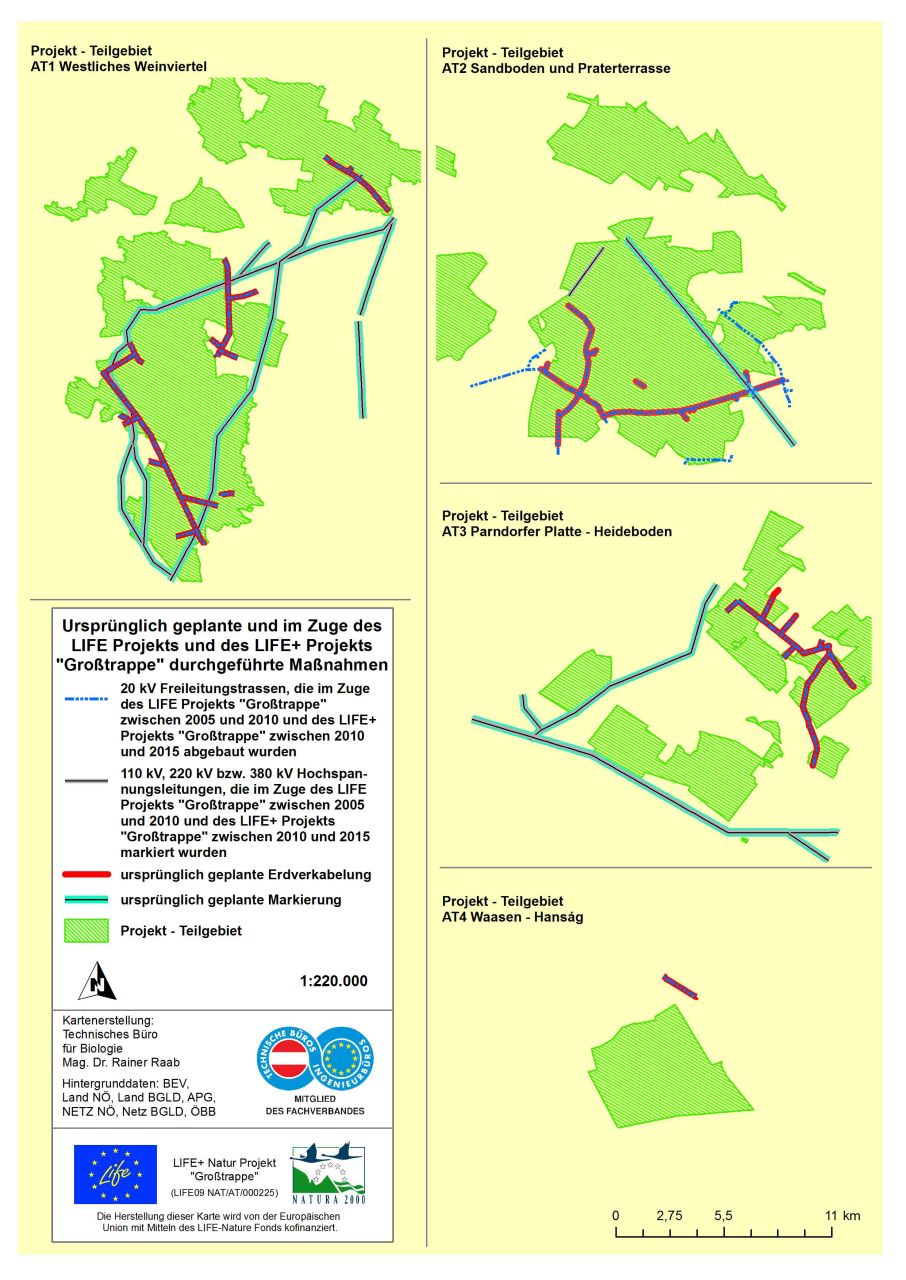
Photo: Project sites
LIFE +
LIFE+ Nature and these actions target the conservation of endangered species and habitats based on the EU Birds Directive and the Fauna Flora Habitats Directive, respectively. The protected area network Natura 2000 contributes to the preservation of the animal and plant diversity in the wild and of their habitats all over Europe.
Concept and Objectives
The LIFE+ Project aimed to extend the successful Austrian LIFE “Great Bustard” conservation programme until 2015 across all four key bustard areas in Austria.
With the main mortality factor—collisions with power lines—already reduced in two regions through undergrounding and line marking, the project focused on further power-line mitigation, especially in the project area Sandboden und Praterterrasse.
The goal was a continued long-term increase of both the Austrian and the cross-border West Pannonian population, while also raising public awareness of cultural landscape values and integrated Natura 2000 conservation.
Implemented measures
Powerline mitigation
Underground cabling 50 km of power lines were placed underground in Burgenland and Lower Austria (51% above target), creating additional power-line-free habitat.
Marking 3.9 km of high-voltage lines were fitted with bird warning devices.
Shelter belts Planned removal of parts of two shelter belts was cancelled because no displaying males remained in those areas.
Photo: Project sites
Population impact
Due to the implementation of this LIFE+ project, the West Pannonian Great Bustard population increased from 403 birds (January 2010) to 500 birds (January 2015).