

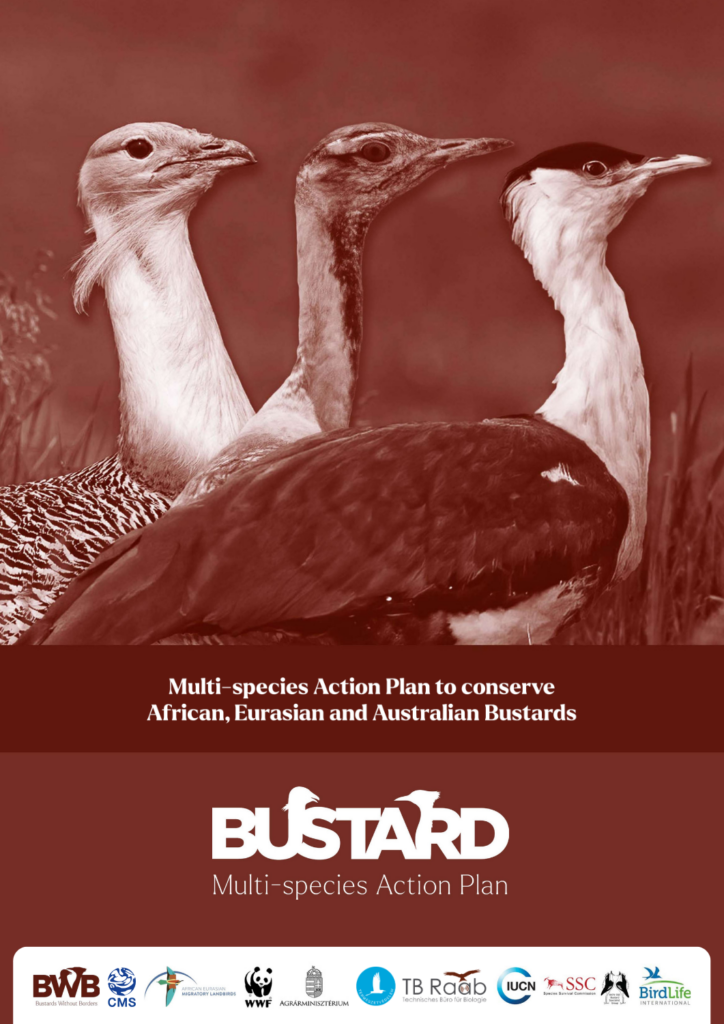
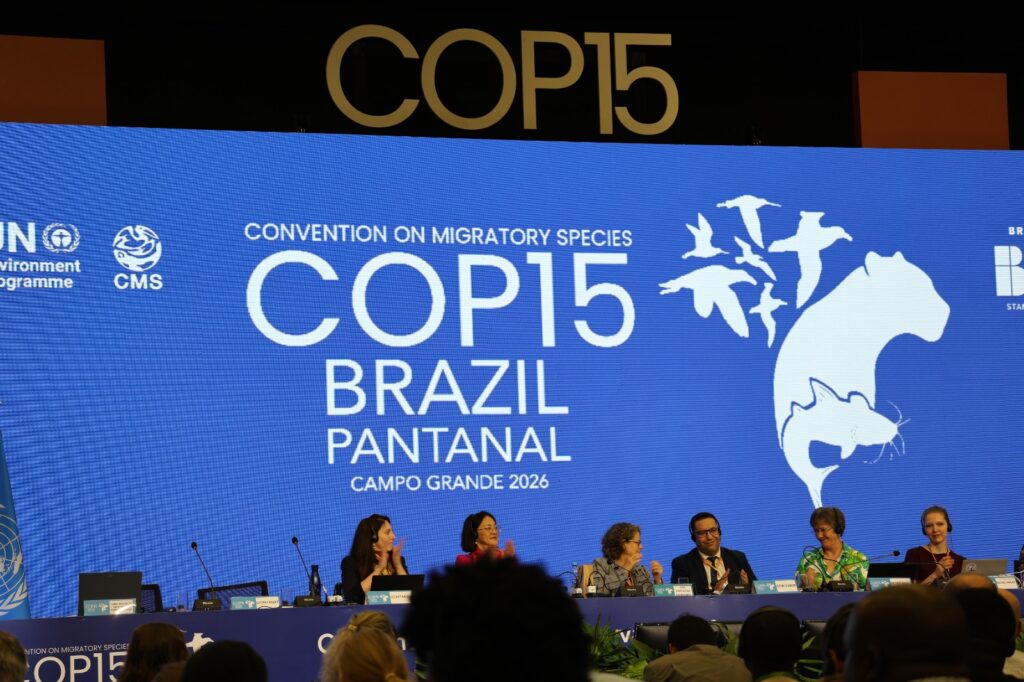
CMS COP15 Adopts Landmark Global Action Plan to Safeguard Bustards Worldwide
© Qiulin Liu
The plan establishes a coordinated, science-based global framework to protect all 26 species of bustards across 102 range states, marking an unprecedented level of international collaboration for these iconic birds.
Bustards—including species such as the Great Bustard, Little Bustard, and Great Indian Bustard—are vital to grassland, steppe, and arid ecosystems across Africa, Europe, Asia, and Australia. Their presence is widely recognized as an indicator of ecosystem health. However, populations are in steep decline due to habitat loss, agricultural intensification, infrastructure development, illegal hunting, and climate change.
The newly adopted MsAP provides a comprehensive roadmap to reverse these declines. It prioritizes:
- Protection and restoration of critical habitats
- Mitigation of key threats such as power line collisions and unsustainable land use
- Strengthened scientific research and long-term monitoring
- Engagement with local communities and stakeholders
- Cross-border cooperation among governments and conservation organizations
Developed through a wide consultative process led by the Bustards Without Borders initiative and supported by international partners, the plan reflects a shared global commitment to safeguarding migratory species that traverse continents and political boundaries.
Conservation successes in parts of Europe—particularly for the Great Bustard—demonstrate that coordinated, science-driven action can stabilize and even recover populations when supported by sustainable agricultural practices and long-term policy commitment.
Experts emphasize that the MsAP comes at a critical moment. Bustards are among the most threatened bird groups globally, and their decline signals broader environmental degradation in some of the world’s most fragile ecosystems.
The adoption of the Bustard Multi-species Action Plan at CMS COP15 represents a decisive step toward unified global action. Its success will depend on effective implementation, sustained investment, and continued international cooperation.